Digging Ditches: 10 Views to a Suicide in the Family

Prologue

My brother David as a boy. Top right: with our mother.

On August 20, 2000, my brother committed suicide. David Richard Huff was just over a month away from his 42nd birthday.

I have written about David almost every year since, usually around the anniversary of his death. Some years I make a minimal acknowledgement that it happened, a tweet, perhaps, including the number or web address for the National Suicide Prevention Lifeline. Some years I write something in-depth.

This year, because suicide is so much in the news after the heartbreaking death of the gloriously gifted comedian and actor Robin Williams, a performer I’d loved ever since I first heard the word “Shazbot” in the late 70s, I feel like I can’t escape the subject. So here I am, again. I am tired of reading the things even the most well-meaning people have to say about mental illness and suicide. This is probably all I have to say about it, at the moment. This isn’t an admonishment, or an explanation. It’s just a story, and a ragged one.

You could read this as if it was a poem. But for this, poetry feels weak. You could read it as fiction. But it’s not.

10547590_10154429828925274_729114330090659568_n
David, our sister Rhonda, and me. I was 3, he was 12, Rhonda was 10.

A couple of years before David died, my father said, “You should talk to your brother. You’re more alike than you realize.”

I probably sneered. We resembled, sure. Both 6’0″, both fair-haired, him blond and me a redhead. We had similar jawlines and noses. But David was trimmer, better-looking. He had an ease with women that was unnatural compared to my overly intense awkwardness. He could be incredibly funny and fun to be with, but he was also tough as nails, the kind of rough and ready fighting man other rough men tell admiring tales about, like one I recall of him taking on more than 2 or 3 other guys in a brawl outside a redneck bar. I was a writer and went to college to be an opera singer, for God’s sake. Aside from having the same parents, what did I truly have in common with my hard-living, rough-handed, truck-driving big brother?

I.

Memories of the days surrounding David’s death are patchy. Some moments are crystalline, far too clear for comfort even 14 years later. Others are blank, or veiled in grief’s gray and lingering haze.

There was the call to where I lived at the time, in rural middle Georgia. My sister Sherry, her voice ragged, calling early in the morning to tell what she knew.

A little later, I talked to my parents. They’d moved to a town in central Mexico where many Americans go to retire, because it’s temperate and beautiful and the locals are always friendly to the expats.

Mom was choked, but she could talk.

Dad just wailed. Across all those miles, his was the voice of a great wounded animal, terrible, trumpeting spasms of grief.

II.

He had always been a wild man but the first report of David’s madness was so florid and strange it took me years to really believe it happened. I was in college at the time, engaged to a surreal blonde girl whom I would later realize was far too smart and disturbed for me.

He had come home to Smyrna, Tennessee after a long-haul trucking run to Pennsylvania, convinced he was possessed with the spirit of a little boy from France. He’d spiraled further out of control once he reached the trailer he shared with his wife and young son on Almaville Road. At some point he threw things through the living room window. There was apparently a police standoff before they took him away.

At some point David made his wife and son dance to shake the demons out.

III.

I never lost track of reality. Sure, in my junior year of college I came down with food poisoning then convinced myself my girlfriend had tried to poison me. Sure, I stopped fulfilling all my obligations at one point because I convinced myself if I stayed home the world wouldn’t end. But I never hallucinated. I still knew I was Steve. I was nothing like my brother, with his ramblings, his ideas about demons.

IV.

David parked his truck at a rest stop in east Tennessee. He took off his clothes and ran around giving away his money. Again, the police came. They had a standoff while he held a Swiss Army Knife to his throat.

David thought the knife was a blessing. It bore the Cross of Jesus.

V.

I’d broken up with the surreal blonde girl. My new girlfriend and I would marry in the next couple of years. I was taking my first antidepressant, prescribed by a doctor who had cerebral palsy. He looked like Allen Ginsberg if the beat poet had been hatched from an alien chrysalis. He hugged me at the end of our last session and told me I’d climbed a mountain.

I was slated to sing the solo with our university choir in a grand and escalating spiritual that sketched the birth of the Christ child then traced his path to Easter. I entered the music hall dry and tired from the antidepressant, but the moment I began the solo, some animating spirit took hold. The audience stood and applauded for several minutes. I took several bows. Our director loved the response so much he encored the piece in the spring concert.

In the end I only drank too much that night, but I clearly recall going back to my apartment feeling that was a good high note. I could go out on that. I could kill myself.

VI.

The last time I saw my brother alive, I was afraid. He’d had more meltdowns and my parents said he’d long been compounding things with drugs. I’m still ashamed to say I awaited his arrival at the apartment I shared with my (first) wife with fear and hesitation. Our first baby had been born premature several months before and as David pulled up in his ramshackle car all I could think about was her.

Then he was in the door, and he was the old Dave, the brother I knew. His shoes were threadbare, and his false teeth ill-fitted, but he was funny and kind and unrelenting with big brotherly advice, even though I kind of knew much of what he tried to tell me already. As we sat on my apartment balcony talking at sundown, he spotted a pretty woman close to his age entering an apartment on the bottom floor. He said hello and smiled and her eyes crinkled and she smiled back.

I asked him if there was anything he needed. He asked for a clock radio and a coke. That was all. He was that specific.

And I realized, I told my mom later, that I would have given him almost anything he asked for then, if I’d had it. I had no explanation for feeling that way, save that he was my brother.

VII.

I left work that day to commit suicide. I’d realized I couldn’t take my life, my shattered marriage, just breathing anymore, and there was only one rational solution. I selected a bridge downtown. Along the way I passed the mental hospital near Nashville’s Centennial Park. I thought of my children and something my chrysalis Ginsberg doctor once said about what you should do if you want to hurt yourself.

Admit me or I’ll kill myself, I told the trim little man with the silly mustache who met me at the lobby desk.

He took me into a small room and questioned me about my state of mind.

His hands shook as he took my things for safekeeping, as the initial observation ward was more like jail than a hospital ward: keys, my wallet, a bottle of Prozac that had stopped working weeks ago, a notebook, a ridiculous packet of Vivarin.

I was admitted to the psych ward wearing jean shorts, a tee-shirt, sandals, and an empty fanny pack.

VIII.

Driving north from middle Georgia toward Nashville on the day David died, I saw off the side of the interstate a great natural sculpture built from kudzu vines and a telephone pole. It was a towering green reaper shimmering in a hot yellow haze. Great green summer Death, pointing north.

I pulled off the interstate and cried for what seemed a very long time.

IX.

I want this to be about real blood and the idea of blood, the thing that sings in our veins when we’re with family. How the song sometimes slips for a moment into a great column of harmony, flooding the listener with relief. Family as a hymn.

I want this to be a neatly-rendered essay suitable for framing or publishing elsewhere.

Instead, I can only recount cleaning David’s watch.

After his funeral, we divided up his meager things. Among them was a watch in a biohazard bag. It was a silver wind-up analog Timex with a flexible band. It was splattered with blood and other matter.

Once I was back in Georgia I put the biohazard bag in a roll-top caddy we kept at one end of the kitchen counter.

I don’t remember how long it sat there, but it wasn’t long. I know I often stared at it, imagining David buying it in a truck stop. Winding it. Slipping it off before bed. 

One night I couldn’t sleep and I decided to clean the watch. Under the glare of that cookie cutter apartment kitchen’s track lights I put on dishwashing gloves and slipped David’s watch from the biohazard bag. I washed it under very hot water.

I remembered playing Go Fish with David, how the game would always devolve into “52-Card Pickup.”

I remembered getting him a “10-4 Good Buddy!” joke license plate for Christmas one year, a nod to his job, to his drawling and sarcastic persona on the CB radio, and overhearing him tell my mom he didn’t have the heart to tell me he’d never use it because “Good Buddy” was trucker slang for a gay man.

I remembered being 7 and riding with him on his motorcycle down the straightaway on Hamilton Church Road toward the sharp hairpin turn in the road where it once snaked into what was now a lake, how I screamed in joy and fear as he banked along the curve.

I washed David’s watch for several minutes, carefully inspecting each segment of the band as I went.

When I was satisfied it was clean, I set it to the proper time and put it on.

X.

Memory’s ostinato doesn’t constantly repeat the last time I saw my brother alive, even though I hold onto the low, waning light, the woman in the parking lot, his rattle-trap car and his shoes. It doesn’t cycle obsessively through those good childhood memories, or the times he was a typical big brother, teasing me, hassling, mocking.

When I turn over my brother and I in my mind, the memory that burns brightest is working beside him one summer when I was 15 and he was 24. We worked for our father’s company and the big job was installing runway lights at a small airfield south of Nashville. David enjoyed telling me what to do, but I felt like he was protecting me from the many strange and rough men on the crew, with their beards and Bowie knives and .357 Magnums tucked under driver’s seats.

One day a summer storm blew in from nowhere as David and I were finishing a ditch the crew had dug to find the old conduit carrying cables to the runway. There was pounding rain, jagged blasts of lightning. The other men on the crew figured they weren’t paid enough to work in the rain and dispersed, thinking (wrongly, I’m certain) my dad would understand.

My brother decided the ditch was too important to wait for the rain. You don’t have to, he told me, grabbing a shovel, but I’m going to keep it up.

In the steadily strengthening storm he hopped into the ditch and began digging wildly. In a moment I grabbed another shovel and joined him. We were alone on the job, at the bottom of a steadily flooding ditch, slinging wet red mud onto the scarred tarmac above. We only quit when the muck reached our knees.

That’s how it happened, that’s where it ended and we went on home, both soaked to our bones.

I keep re-imagining that day.

In my mind I keep breaking time’s chains to return to that ditch and the rising, rusty water. The broken slideshow reel in my head becomes a film of us flailing at the mud as the ditch floods. We are indistinguishable mud men, wielding flashing shovels against the storm’s onslaught.

We match each other, shovelful for shovelful, until the water takes us, and we drown.

Divisible by Five: A Weird Guy Works Out

If my blog subjects boil down to history, murder and fitness, I guess that’s okay. Whatever, here’s a switch-up from the previous post. This is about how I sometimes like to do workouts designed to be entirely divisible by the number five.

This is called making  my weirdness work for me. I’d stop short of saying I’m obsessed with the number 5. I think I just like the neatness of dividing and multiplying with it.

Anyway, I’m a weirdo and here’s the workout I did tonight. This isn’t a suggested workout. In fact, maybe you shouldn’t try it, since I enjoyed it partly because I set up the whole weird divisible by 5 deal. All that said, I was bushed when I finished.

Equipment used:

THE RACK: Appropriately named after a torture device

I bought The Rack about a year ago. It spends a good part of the week holding up my and my wife’s “clothes not dirty enough to wash that we might wear again this week–in a pinch.” However, I use the damned thing every week for its intended purpose, and I love it for that. Go here to see non-semi-dirty clothes hanger uses for The Rack.

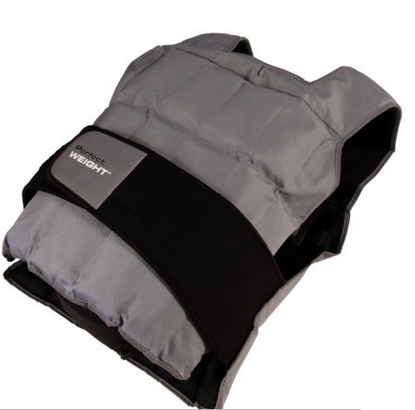
(Not so) Perfect weight vest

The Perfect Weighted Vest is not exactly perfect. I bought this to have maximum poundage (40 lbs when all slots are filled), but discovered pretty quickly the design of this vest is such that any kind of fast-moving, complex bodyweight move while wearing it is rendered tougher than it should be because the vest tends to fold and curl. The problem seems to be the flap below the velcro clasp. That said, it does its job, for the most part, which is simply to add weight to make bodyweight stuff even harder than it should be. I’ll probably get a less flappy vest in the future but this is fine for now.

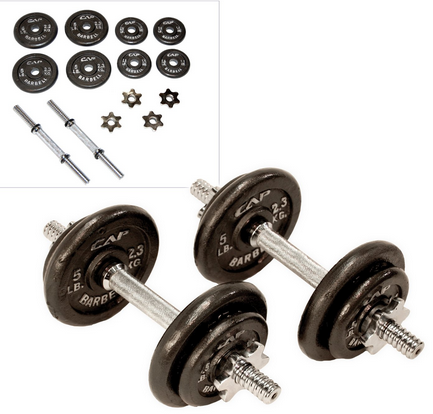
Dumbbells.
Dumbbells.

What? They’re dumbbells. I used two, loaded with 35 lbs.

I set my phone’s timer app for 20 minutes. The vest was loaded with 20 lbs and I wore it for the whole workout. After a 2-minute warmup, I started the timer and did the following:

… Five times through.

I finished the last reps of the final set of Arnolds (named, yes, after Ah-nuld Schwarzenegger) as the timer beeped. This added up to 25 dips, 50 burpees, 25 curls, and 25 Arnolds. All while wearing the 20-lb. vest.

The vest combined with the enforced 20-minute limit made all the difference, I’m certain–especially with burpees. Once I managed to secure the velcro straps well enough that they wouldn’t come undone, every set of 5 felt progressively more brutal and taxing.

And it was all, including the enforced 20-minute time, divisible by five.

Because I’m weird, and I’m fine with that.

July 31, 1914: Lightning on the Horizon

Honolulu Star-Bulletin, July 31, 1914 (3:30 p.m. edition)

While World War I officially began on July 28, 1914, it took American media until July 31st to catch up to what was going on–likely in part because that was the day Imperial Russia announced its vast army was mobilizing in preparation for war.

Also, dispatches from foreign correspondents were still relayed by telegraph in some places, so transcription and copyediting naturally took some time. What’s interesting when surveying lesser-known papers like the Honolulu Star-Bulletin above is how much work they put in to their front pages announcing the beginning of hostilities. If anything, they were much more visually interesting (at least to a modern-day eye) than the staid and text-heavy New York Times or Washington Post (though these papers, in their defense, were often using the words of their own foreign correspondents, not press services).

The Star-Bulletin must have had a pretty hard-working staff, as the right side of the page above looks upon close inspection a lot like a live-blog, using reports aggregated from the “Associated Press Service by Federal Wireless”:

Detail from the Honolulu Star-Bulletin, 7/31/1914
Detail from the front page of the Honolulu Star-Bulletin, 7/31/1914

Another of the many small city papers that used eye-catching graphics to bring home the gravity of developments in Europe was Missoula, Montana’s Daily Missoulian, which published this striking and (to me) oddly modern graphic meant to illustrate the relative sizes of the armies of the initial aggressors:

Graphic from Missoula, MT Daily Missoulian, 7/31/1914

Much closer to the action, old line English papers like the Daily Telegraph soldiered on without much obvious drama, though the Telegraph’s coverage was comprehensive. This map published in the July 31st, 1914 Telegraph illustrated known Austrian and Serbian troop movements:

Map from the London (UK) Daily Telegraph, pubbed 7/31/1914

Though the media worldwide had paid close attention to the June 28, 1914 assassination in Sarajevo of Archduke Franz Ferdinand and his wife Sophie, it seems like July 31st was the moment everyone realized the size and gravity of what was happening on the Continent. They saw the lightning, and even as far away as Honolulu, Hawaii, they were waiting on the thunder.

Keeping it brief–a dumb post about working out

Image from 12 Minute Athlete

When I started exercising regularly again at 43, I quickly learned whatever I thought I knew about fitness in my teens and twenties–and I thought I knew a great deal–was either hilariously limited or just plain wrong.

That is, I had some hardened ideas that were actually working against me. One was the idea that it wasn’t a workout unless you were busting ass for at least 30 minutes. No wonder I’d think about getting back in shape in my late twenties and throughout my thirties, consider how much work I might have to do, and usually decide I had other stuff that might need my attention.

Once exercise did become a habit again, I had to learn that just for purely practical reasons sometimes a workout needed to be short, but hopefully intense. Especially if I wanted to work out frequently. Otherwise, at some point my body would just stall and say NOPE, WE’RE DONE. (It’s done that to me, so I speak from experience.)

Once I learned to love the fast-paced, brief workout, I discovered there are a ton of good resources for them online. Many are CrossFit-related, but there’s also the excellent 12-Minute Athlete, a frequently updated blog that plainly lays out well-balanced 12-minute HIIT (High Intensity Interval Training) workouts with simple, pleasing graphics and videos.

All of this is preamble to note the 12-minute workout I did tonight. Even though I’m making it a point to give a shout-out to 12-Minute Athlete, I actually found this on a CrossFit site. Here it is as posted there:

Complete as many rounds as possible in 12 mins of:
8 Burpees
10 Kettlebell Swings, 24/16 kg
12 Air Squats

I used a 70-lb kettlebell but otherwise did the workout as directed and completed 5 rounds, adding up to 40 burpees, 50 swings and 60 squats. And when I was done, I did all the sweating, for a while. It felt like an excellent workout both for the range of muscles hit and for the level of tiredness I felt when done.

I think my point is to recommend to anyone who might read this that if you’re stuck in the old “I MUST DO THIS FOR AN ETERNITY OF SUFFERING” mindset as I once was, well, there are definitely excellent alternatives.


The Unbearable Writeness of Blogging

I have, for a long time, hated blogging. What I hate about blogging is not the act of writing for public consumption. It’s the heavy load the words “blog” and “blogging” have carried for a few years now. In my mind, and I suspect the minds of others as well, the moment something you’ve researched, edited, and labored over moves from an “essay” or any other form of writing to a “blog post,” it feels somehow diminished. This is both a subjective attitude developed from peculiar, personal experience and something I’ve noticed in pop culture and the media. Tell someone you’re a journalist and they won’t blink–it’s a long accepted job, even if it’s one people sometimes reflexively dislike. Say you’re a blogger–even if it’s a paid gig–and watch many people try to put the brakes on a bit of a sneer.

So as other posts in this blog indicate, doing this is a frequent source of internal conflict for me. A lot of things figure into that, including the question of ‘why bother?’

After this post about my weight loss and many of the factors that led me to do it was highlighted by WordPress’s “Freshly Pressed,” I discovered something surprising: a ton of people are still happily blogging away, just because they want to. I found this out from the ongoing response to that post, and from reviewing the blogs of many who liked it and then chose to follow me.

If you listen to the nimrods who blog for popular sites (certain tech blogs, etc.) about social media, you might get the impression that tools like Twitter and Tumblr have killed old-fashioned blogging (a ridiculous term itself, since blogging isn’t even 20 years old, really) just for the heck of it.*

I think the response to my post featured on “Freshly Pressed” opened my eyes to the fact that blogging hasn’t really died out at all, and there are still plenty of people doing it because they feel compelled to. It may have begun to re-legitimize the act of blogging, in my eyes.

As a result, I’ve decided, after a silly amount of hemming and hawing, to focus much more of my writing in general in this space. A problem with the wealth of choices available to anyone wanting to publish much of anything online now is that very wealth…if you’re as ADD** as me, it’s often irresistible. I want to try that new Tumblr idea. I want to give that funny Twitter parody idea a shot. I want to check out this tool and see if it’s better than WordPress, or use that other one and see if it’s got better Google search penetration than Tumblr.

I want to, but I think rather than be distracted by the “oooohhh shiny,” I’m going to remain resolute and put it here, come hell or high water. I’m committing. It’s disturbing, and makes me uncomfortable.

That will mean a wide variety of weirdness, including pointless talking to myself posts like this. Something I try to not do, but continue doing. Thanks for following along, hope it’s worth your time. And mine.

*Backtracking: in 2005 I had been blogging for 5 years ‘just for the heck of it’ and someone invited me to write for their site for pay. That was news writing, not precisely blogging, but it led ultimately to, among other things, paid blogging, including launching and anchoring a blog about crime for Village Voice Media. After that blogging was officially a job, and that probably was the main reason I underwent a huge change in attitude about this endeavor.

**Medically diagnosed ADD, dammit, not self-diagnosed based on some online tests. The internet has provided innumerable tools for allowing people to glibly determine they are impaired or dying.

June 27, 1914: The Battle in Paris, Johnson vs. Moran

Jack Johnson - boxrec.com
Jack Johnson – boxrec.com
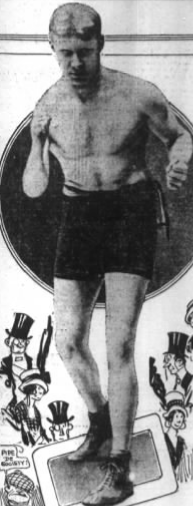
Frank Moran (an early victim of what would be bad photoshopping today) image from the Chicago Daily Tribune, published 6/28/1914

In 1914, world heavyweight boxing champion Jack Johnson was in exile. Technically his crime was violation of the Mann Act, which criminalized the transportation of women across state lines “for the purpose of prostitution or debauchery, or for any other immoral purpose.” The truth was Jack Johnson, the son of former slaves, had married Lucille Cameron, a white woman. Johnson had been convicted by a snow-white jury of the Mann Act violation even after Cameron had refused to cooperate with the case against him. Johnson decided to skip town and the couple had fled the U.S. through Canada. By 1914 they were living in Paris.

A lesser known boxer came to Paris in June of 1914 to challenge Johnson’s crown, and the truth was he was well-positioned to do so. Frank Moran had fought Johnson before and was familiar with the champ’s style, and Moran had developed a rep as a knock-out artist, with a savage right cross he lovingly dubbed “Mary Ann.”

The Chicago Tribune published a detailed account of the match the following day, but the tenor of most of the American coverage of the fight can easily be gleaned from these paragraphs recounting the 14th through 16th rounds:

(Chicago Daily Tribune, 6/28/1914)

Below is a video made from the film of the fight. Someone has inserted both crowd noises and voiceover/play-by-play, but it still appears to capture the key moments.

In the end, the match wasn’t particularly exciting, and it was decided for Johnson. Most fight observers agreed he wasn’t in his best form and took some cheap shots when he could, but remained the superior fighter. Jack Johnson’s fascinating career trended downward from there, as he was already 37 at the time of the bout. Ken Burns made a documentary about Johnson that you can read more about here: Unforgivable Blackness: The Rise and Fall of Jack Johnson.

Frank Moran became a Zelig-like character, rubbing elbows with some of the 20th century’s most notable people. “The Fighting Dentist,” as he was sometimes called (huh?), had sparred with the likes of Theodore Roosevelt early in the 1900s, and by the late 1920s he was an actor. He appeared, sometimes uncredited, in films with famous names like Bela Lugosi, Mae West, Charlie Chaplin, Bob Hope and Bing Crosby.

Little noticed in Europe at large, much less other parts of the world, an Austro-Hungarian royal and his wife dined in Sarajevo, 1,111 miles from Paris. They feasted with other dignitaries on fine wine and fresh trout. The following day, June 28, Archduke Franz Ferdinand and Sophie, Duchess of Hohenberg, planned to review Austro-Hungarian troops and attend a museum dedication.

[The Chicago Sunday Tribune, via Newspapers.com]

Paris, 1914: a solstice gathering

The Flammarion Engraving, artist unknown, associated with writings of Camille Flammarion - Wikipedia, public domain image
The Flammarion Engraving, artist unknown, associated with writings of Camille Flammarion – Wikipedia, public domain image

At midnight on June 22, 1914, an august party of dignitaries gathered atop the Eiffel Tower to, according to the following day’s New York Times, “salute sunrise on the occasion of the Summer solstice.”

The gathering was not the first of its kind (it was the eleventh) and perhaps not of historical importance, but the famous names mentioned in the Times article imbued the account with a certain gravity.

A Jean de Paléologue poster for Loïe Fuller at the Folies Bergère in 1902 (Wikipedia, public domain)

The Times reported that attendees included astronomer and author Nicolas Camille Flammarion, who addressed the gathering. Also among the 200 or so in attendance were leading French composer Camille Saint-Saëns, Gustave Eiffel himself, and American astronomer Percival Lowell.

The assemblage had a banquet, at some point Flammarion gave his speech and the Times reported everyone enjoyed “an ‘astronomical burlesque.'”

Then, at 3 a.m., American dancer Loïe Fuller took center stage and performed a “sunrise dance.”

Fuller, a true pioneer in dance, had left America many years before to find her fame in Europe. She became a star in Paris, and it remained her home till her death in 1928. She was a true innovator in style and lighting, famed for her “Serpentine Dance.”

Aside from newspaper accounts, there isn’t much of a record of Mme. Fuller’s appearance on the Tower that solstice, nor of how she choreographed her 1914 “sunrise” steps. This silent short from 1902 of her performing the “Serpentine” illustrates her style.

A sense of what those assembled atop the Eiffel Tower that night may have felt watching the performance can be gleaned from a  quote by her contemporary Arsène Alexandre, who described Fuller as a “marvelous dream-creature you see dancing madly in a vision swirling among her dappled veils which change ten thousand times a minute.”

As for the speaker, Camille Flammarion–he was a forerunner of the likes of Carl Sagan and Neil deGrasse Tyson, popularizing astronomy the best way he could at the time, through lectures as well as scientific and speculative writing. Some idea of Flammarion’s way with words can be found in the Augusta Rice Stetson translation of his novel Uranie. In Chapter 3, describing the protagonist’s fanciful flight across several other worlds, Flammarion portrayed a moment among human-like creatures with glowing eyes:

On another globe which we crossed during the night […] human eyes are so constructed as to be luminous, and shine as though some phosphorescent emanation radiated from their strange centres. A night meeting comprising a large number of these persons presents an extremely fantastic appearance, because the brilliancy, as well as the color, of the eyes changes with the different passions by which they are swayed.

Imagine that night, with a cool breeze up there above the hustle and clamor of Paris, that “marvelous dream-creature” turning wildly in her shimmering silks before the crowd. The lights of the city below like Flammarion’s fantastic night meeting of glowing eyes, watching the tower and the sky beyond. It was a moment, a pause.

June 28 was less than a week away.

[The New York Times, edition published 6/23/1914, via Newspapers.com]